Denosumab (60mg/ml) Injection
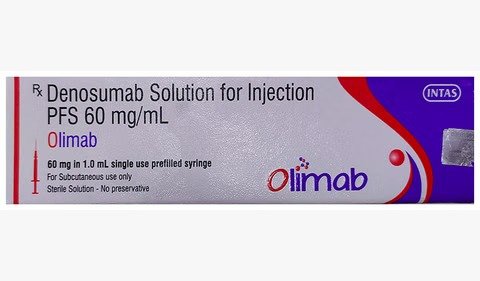
Product Summary : Olimab Injection is a monoclonal antibody containing denosumab used to treat osteoporosis in postmenopausal women and men at increased risk of fractures. It helps slow down bone breakdown, making bones stronger and reducing the risk of fractures. It is given as an injection under the skin once every 6 months. The doctor may advise calcium and vitamin D supplements during treatment. Common side effects include back pain, pain in the arms or legs, and muscle or bone pain. Do not stop or delay treatment without consulting your doctor, as this may increase the risk of fractures. Tell your doctor if you have kidney disease, especially if you are on dialysis, as Olimab Injection can cause severely low blood calcium levels.
Olimab Injection is used to treat osteoporosis in postmenopausal women and men at increased risk of fractures. It is also used to manage bone loss associated with long-term glucocorticoid treatment. It works by slowing down bone breakdown, which helps increase bone strength and reduce the risk of fractures.
Olimab Injection is given as an injection under the skin once every 6 months. Your doctor may advise you to take adequate calcium and vitamin D during treatment. Do not delay or stop treatment without consulting your doctor, as stopping the treatment can increase the risk of fractures. If treatment is discontinued, your doctor may recommend another medicine to prevent bone loss.
Common side effects of Olimab Injection include back pain, pain in the arms or legs, joint pain, and muscle or bone pain. Tell your doctor if these symptoms become severe or do not go away. They may be able to suggest ways to manage or treat the side effects.
Olimab Injection can cause low calcium levels in the blood. Your doctor may check your calcium and other mineral levels before and during treatment. Inform your doctor you have kidney problems or are on dialysis. Olimab Injection should not be used during pregnancy as it may harm the unborn baby. Women of reproductive age should use effective contraception during treatment and for at least 5 months after the last dose.
Uses of Olimab Solution for Injection
Side effects of Olimab Solution for Injection
Most side effects do not require any medical attention and disappear as your body adjusts to the medicine. Consult your doctor if they persist or if you’re worried about them
Common side effects of Olimab
- Back pain
- Pain in extremities
- Hypercholesterolemia (high cholesterol)
- Musculoskeletal (bone, muscle or joint) pain
- Cystitis
- Pancreatic inflammation
- Joint pain
- Nasopharyngitis (inflammation of the throat and nasal passages)
- High blood pressure
- Bronchitis (inflammation of the airways)
- Headache
How to use Olimab Solution for Injection
Your doctor or nurse will guide you how to use this medicine.
How Olimab Solution for Injection works
Olimab Injection is a monoclonal antibody that works by blocking a protein called RANKL, which is involved in the formation and activity of cells called osteoclasts that break down bone. Blocking RANKL reduces the formation and activity of these bone-breaking cells. This slows bone loss, increases bone mass, and helps make bones stronger.
Safety advice

Alcohol
CONSULT YOUR DOCTOR
It is not known whether it is safe to consume alcohol with Olimab Injection. Please consult your doctor.

Pregnancy
UNSAFE
Olimab Injection is highly unsafe during pregnancy. It can cause serious harm to the unborn baby, including birth defects and pregnancy loss. Do not use this medicine if you are pregnant or planning to become pregnant.

Breast feeding
CAUTION
Olimab Injection should be used with caution during breastfeeding. Breastfeeding should be held until the treatment of the mother is completed and the drug is eliminated from the body.

Driving
SAFE
Olimab Injection does not usually affect your ability to drive.

Kidney
SAFE IF PRESCRIBED
Olimab Injection is safe to use in patients with kidney disease. No dose adjustment is recommended.
However, patients with advanced kidney disease, especially those on dialysis, have an increased risk of severe low blood calcium levels (hypocalcemia). Close monitoring of calcium levels is recommended.

Liver
CONSULT YOUR DOCTOR
There is limited data available on the use of Olimab Injection in patients with liver disease.
Quick tips
- Take calcium and vitamin D supplements as advised by your doctor to help maintain normal calcium levels during treatment.
- Do not stop Olimab Injection without talking to your doctor. Stopping or delaying treatment may increase the risk of fractures, including multiple fractures of the spine. If treatment is stopped, your doctor may prescribe another medicine to prevent bone loss.
- Tell your doctor if you have kidney disease or are on dialysis. Advanced kidney disease significantly increases the risk of severe low calcium levels, and close monitoring may be required.
- Maintain good oral and dental hygiene and have regular dental checkups. Tell your dentist that you are receiving Olimab Injection before undergoing dental procedures.
- Contact your doctor if you develop new or unusual pain in your thigh, hip, or groin, as this may be an early sign of an unusual thigh-bone fracture.
- Seek medical attention if you develop symptoms of low calcium, such as muscle spasms or cramps, tingling or numbness around the mouth or in the fingers or toes.
- Do not use Olimab Injection during pregnancy. Women who can become pregnant should use effective contraception during treatment and for at least 5 months after the last dose.
Patients taking Olimab Injection

Once A Month
81%
Once A Week
14%
Twice A Month
5%