Alcohol and Cancer Risk: What Evidence Shows
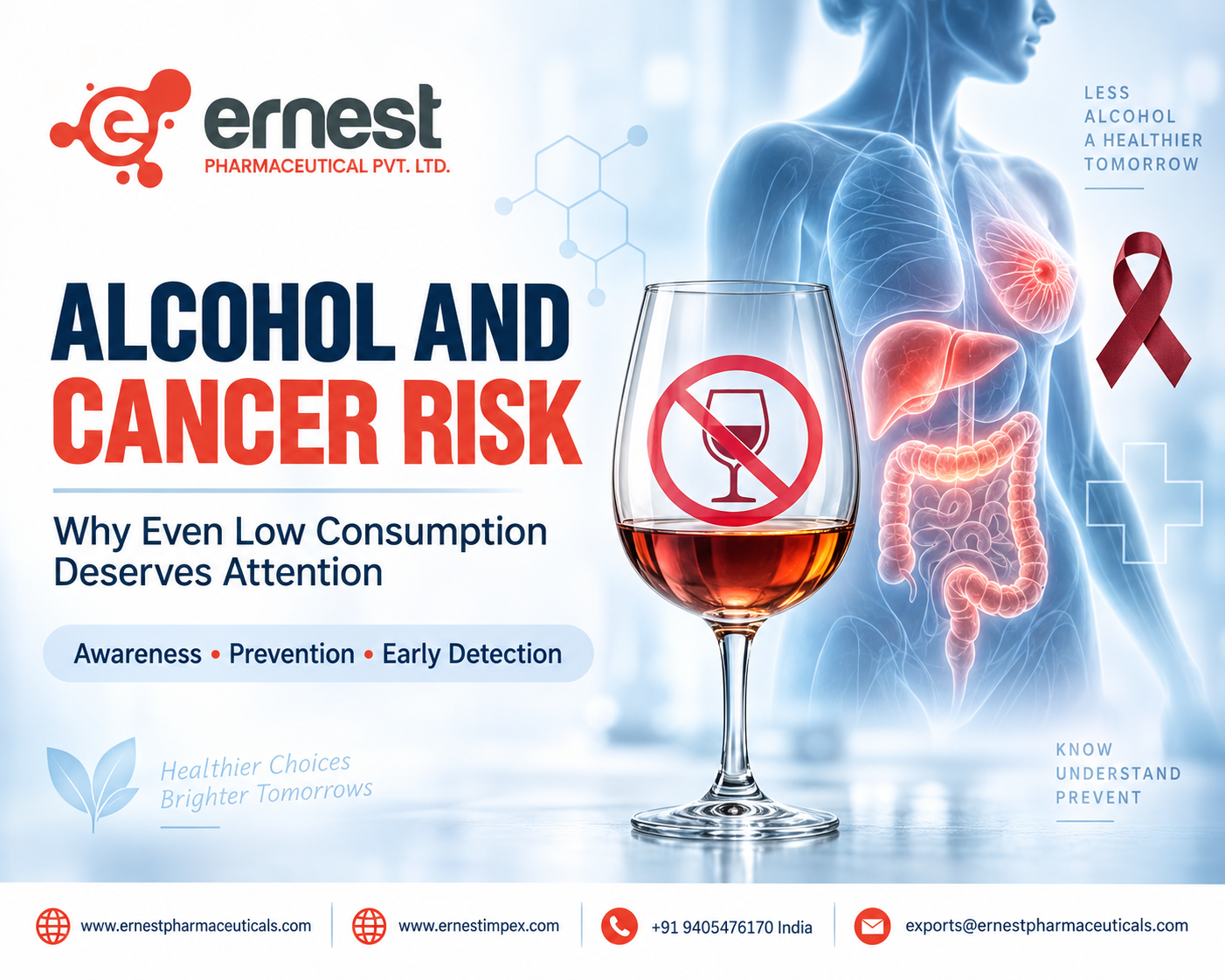
Alcohol and Cancer Risk: Why Even Low Consumption Deserves Attention
Many people associate alcohol-related health problems exclusively with heavy or long-term drinking. However, scientific evidence increasingly shows that cancer risk may begin rising at consumption levels that many people consider moderate.
Alcohol has been classified as a human carcinogen, meaning there is sufficient evidence that it can cause cancer. The World Health Organization and International Agency for Research on Cancer state that no completely risk-free level of alcohol consumption can be established for cancer prevention. Risk generally increases as alcohol intake rises, but it does not necessarily begin only after someone becomes a heavy drinker.
This does not mean that one drink will cause cancer. It means that even relatively low alcohol exposure may add to a person’s lifetime risk.
What Recent Research Indicates
A large 2026 evidence review reportedly evaluated 843 studies covering alcohol consumption and numerous health outcomes. The analysis found that the clearest adverse evidence involved cancer, with increased risk appearing even at low-to-moderate consumption levels.
The review reported associations between alcohol consumption and ten cancer sites or groups, including cancers of the:
- Lip and oral cavity
- Pharynx
- Larynx
- Oesophagus
- Breast
- Liver
- Colon and rectum
- Pancreas
- Prostate
However, it is important to interpret these findings carefully. International health authorities currently describe the causal evidence as firmly established for at least seven cancer types: cancers of the oral cavity, pharynx, larynx, oesophagus, liver, colorectum and female breast. Evidence involving other cancer sites may continue to develop as additional research becomes available.
How Alcohol Can Contribute to Cancer
Alcoholic beverages contain ethanol. When the body metabolises ethanol, it produces acetaldehyde—a toxic compound capable of damaging DNA and proteins.
Alcohol may contribute to cancer through several mechanisms:
DNA damage
Acetaldehyde can damage genetic material and interfere with the body’s ability to repair that damage. Repeated exposure can increase the possibility of abnormal cellular changes.
Oxidative stress
Alcohol metabolism can generate reactive oxygen species. These unstable molecules may damage cells, proteins and DNA when the body cannot neutralise them effectively.
Hormonal changes
Alcohol can increase levels of hormones such as oestrogen. Higher oestrogen exposure is one mechanism associated with an increased risk of some breast cancers.
Reduced nutrient absorption
Long-term alcohol use may interfere with the absorption or processing of nutrients, including folate, which supports normal cell growth and DNA maintenance.
Interaction with tobacco
Alcohol and tobacco together can produce a greater risk of cancers of the mouth, throat, larynx and oesophagus than either exposure alone. Alcohol may make it easier for tobacco-related carcinogens to enter cells.
Does the Type of Alcohol Matter?
Beer, wine and spirits all contain ethanol. The cancer-related risk comes primarily from the alcohol itself rather than the price, quality or category of the beverage.
Red wine is sometimes described as beneficial because it contains compounds such as resveratrol. However, current evidence does not establish wine as a cancer-prevention strategy. Drinking wine should not be recommended as a way to obtain antioxidants or improve health. Similar nutrients can be obtained from non-alcoholic foods without exposure to ethanol.
Understanding “No Safe Level”
The statement that there is no safe level for cancer risk does not mean that every person who drinks alcohol will develop cancer. Cancer is influenced by age, genetics, tobacco use, diet, infections, occupational exposures, hormonal factors and other individual circumstances.
It means researchers cannot identify a level at which alcohol produces absolutely no cancer-related risk. The risk generally follows a dose-response pattern: lower consumption carries less risk than higher consumption, while avoiding alcohol eliminates alcohol-related cancer exposure.
Practical Steps to Reduce Risk
People who drink alcohol can take practical steps to reduce their exposure:
- Reduce the number of drinking days
- Choose alcohol-free alternatives
- Avoid binge drinking
- Do not combine alcohol with tobacco
- Discuss alcohol use honestly with a healthcare professional
- Participate in recommended cancer-screening programmes
- Seek professional help if reducing consumption is difficult
People who do not currently drink should not begin drinking for claimed health benefits.
Anyone receiving cancer treatment should discuss alcohol consumption with their oncology team. Alcohol may worsen side effects, interact with medicines or be unsuitable during specific treatments.
The Importance of Prevention and Early Detection
Alcohol-related cancer prevention is not limited to personal behaviour. Healthcare systems, hospitals, pharmacies and public-health organisations also have important roles in:
- Providing evidence-based patient education
- Identifying harmful drinking patterns
- Offering behavioural and medical support
- Improving access to cancer screening
- Supporting early diagnosis
- Maintaining responsible oncology medicine procurement
- Ensuring continuity of supportive and palliative care
Reducing alcohol consumption can reduce future cancer risk. IARC estimates that alcohol was responsible for approximately 741,300 new cancer cases worldwide in 2020, demonstrating the importance of prevention alongside diagnosis and treatment.
Global Pharmaceutical and Oncology Supply Support
Ernest Pharmaceutical Pvt. Ltd. supports legitimate healthcare procurement requirements from pharmaceutical distributors, registered importers, hospitals, pharmacies, wholesalers and institutional buyers.
Our international supply network serves enquiries from:
- United States
- United Kingdom
- Russia
- Australia
- Brazil
- Indonesia
- Philippines
- South Africa
- European markets
Our B2B services include pharmaceutical sourcing, bulk medicine supply, oncology product enquiries, hospital procurement support, export documentation and international shipping coordination.
Product availability and supply are subject to manufacturer stock, prescription requirements, destination-country registration, import permissions and applicable pharmaceutical regulations.
Frequently Asked Questions
1. Can one alcoholic drink per day increase cancer risk?
Research indicates that the risk of certain cancers may begin increasing at low consumption levels. The individual increase may be small, but it can become meaningful across a population and over many years.
2. Is wine safer than beer or spirits?
No alcoholic beverage is considered risk-free for cancer prevention because all conventional alcoholic drinks contain ethanol.
3. Which cancers are most clearly linked to alcohol?
Established links include cancers of the mouth, pharynx, larynx, oesophagus, liver, colorectum and female breast.
4. Does stopping alcohol reduce cancer risk?
Evidence reviewed by IARC indicates that reducing or stopping alcohol consumption can lower the risk of certain alcohol-related cancers over time.
5. Can alcohol interact with cancer medicines?
Yes. Alcohol may interact with certain treatments or aggravate side effects. Patients should consult their treating oncologist or pharmacist.
Send Your Medicine Requirement Today
Contact Ernest Pharmaceutical Pvt. Ltd. for bulk pharmaceutical requirements, oncology medicine enquiries, hospital procurement and international distribution support.
Pharmaceutical Exporter | Bulk Medicine Supplier | Worldwide Distribution
Websites: www.ernestpharmaceuticals.com | www.ernestimpex.com
Email: exports@ernestpharmaceuticals.com
Phone: +91 9405476170 India
Medical disclaimer: This article is intended for general education and B2B healthcare information. It does not replace medical diagnosis, treatment or personalised advice from a qualified healthcare professional. Prescription and oncology medicines must be supplied and used according to applicable laws and professional supervision.