Short-Dated Medicine Supply: A Pharmaceutical Procurement Case Study
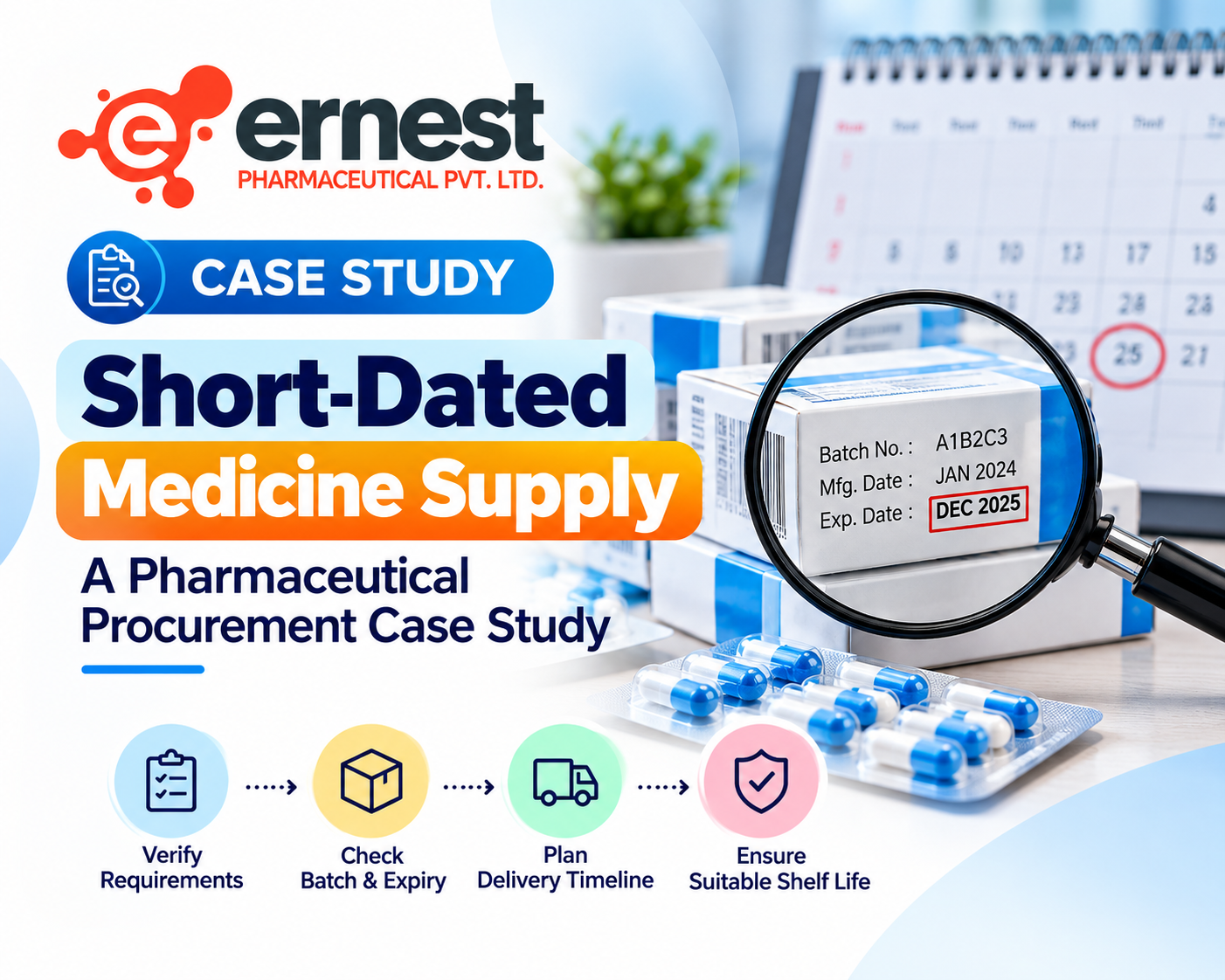
Short-Dated Medicine Supply: A Pharmaceutical Procurement Case Study
Pharmaceutical procurement involves more than checking whether a medicine is available in the required quantity. One important factor is the remaining shelf life of the medicine at the time of supply. This becomes particularly important when medicines are being purchased for distribution, institutional use, or international shipment. A product may technically be within its expiry date but still have insufficient remaining shelf life for the buyer’s intended purpose.
This case study looks at a practical procurement situation in which the available medicine met the requested product and quantity requirements, but its remaining shelf life required further review before the order could proceed.
Background
A pharmaceutical buyer submitted an enquiry for a medicine required in commercial quantities.
The initial procurement requirements included:
- Correct medicine and strength
- Required quantity
- Suitable packaging
- Acceptable commercial terms
- Availability for planned dispatch
During the sourcing process, suitable stock was identified. However, before the order was finalized, the remaining shelf life of the available batch was reviewed. The medicine was not expired and could still legally be within its labelled shelf life. The concern was different: would enough shelf life remain after procurement, transportation, customs clearance, local distribution, and storage?
That question changed the procurement decision.
The Procurement Challenge
In pharmaceutical purchasing, “in stock” does not always mean “suitable for supply.” For example, consider a medicine with an expiry date several months away. If it is intended for immediate local consumption, that period might be acceptable under applicable rules and the purchaser's policies.
For an international or distribution order, however, additional time may be required for:
Order processing → dispatch → transportation → customs clearance → warehouse receipt → onward distribution → eventual use
A batch that starts with a limited shelf life may have considerably less shelf life by the time it reaches the end user. The buyer therefore needs to assess the product based not only on availability but also on its usable remaining shelf life.
Why Remaining Shelf Life Matters
Expiry dates are established for specific products and storage conditions. Procurement teams also need to consider how much of the labelled shelf life remains when stock is received. This is particularly relevant when medicines will pass through multiple stages of the supply chain. A distributor may need sufficient time to receive, store, and distribute the stock. Hospitals or pharmacies may also have internal requirements governing the remaining shelf life they will accept. Import requirements, tender specifications, purchaser policies, or contractual conditions can further affect the minimum acceptable remaining shelf life. There is therefore no single shelf-life requirement that can automatically be applied to every pharmaceutical order.
Step 1: Verify the Available Batch
Before proceeding, the available stock should be checked against batch-specific information.
Important details may include:
- Product name
- Active ingredient
- Strength
- Dosage form
- Batch or lot number
- Manufacturing date
- Expiry date
- Pack size
- Quantity available
- Storage conditions
These details allow the procurement team to determine whether the available batch matches the original requirement.
Step 2: Calculate Remaining Shelf Life
The expiry date should not be considered in isolation. The relevant question is how much shelf life will remain at important stages of the supply process.
For example:
Current date → expected dispatch date → estimated arrival date → expected distribution period
If several weeks or months may pass between procurement and final distribution, that time must be considered before accepting the batch. A medicine that appears acceptable when first sourced may no longer meet the purchaser's requirement by the expected delivery date.
Step 3: Confirm the Buyer's Requirement
Rather than assuming that the available shelf life is acceptable, the requirement should be confirmed before dispatch.
Depending on the transaction, the buyer may specify a minimum remaining shelf life at:
- Time of dispatch
- Time of shipment
- Time of arrival
- Customs clearance
- Warehouse receipt
This distinction is important. For example, a requirement for a certain shelf life “at dispatch” is different from the same requirement “on arrival.”
The expected transportation period can create a significant difference between the two.
Step 4: Review Alternatives
When an available batch does not provide sufficient remaining shelf life, several procurement options may need to be considered. A newer batch may be requested from the manufacturer or authorized supply channel. If new production is expected, procurement may be delayed until a suitable batch becomes available. In some situations, the buyer may decide that the available shelf life is acceptable for the intended use, provided the decision is consistent with applicable requirements and organizational policy. The important point is that the decision should be made before shipment, based on clear batch and expiry information.
Step 5: Document the Agreed Specification
Once the acceptable shelf-life requirement has been established, it should be clearly documented. Depending on the transaction, relevant information may appear in the purchase order, quotation, proforma invoice, supply agreement, batch documentation, or other procurement records. Instead of simply stating "long expiry required," a more precise specification can help reduce ambiguity. For instance, procurement documents can say whether the requirement applies at dispatch or receipt and what the minimum shelf life should be.
Outcome of the Case
The batch review identified the shelf-life issue before the medicine entered the dispatch process. Instead of treating product availability as sufficient confirmation, the procurement process included an additional review of the batch and expiry information. This made it possible to check the available stock against what the buyer really needed before shipping. The case demonstrates why expiry verification should take place early in pharmaceutical procurement rather than after an order has already been packed or dispatched.
What Can Procurement Teams Learn From This Case?
The main lesson is simple:
Medicine availability and medicine suitability are not always the same thing.
A product can have the correct name, strength, dosage form, pack size, and quantity while still being unsuitable for a particular procurement requirement because of its remaining shelf life.
A useful pre-dispatch verification process can therefore include:
Product → Strength → Pack Size → Quantity → Batch → Manufacturing Date → Expiry Date → Remaining Shelf Life → Storage Requirement → Dispatch
This provides a more complete review than checking stock availability alone.
Reducing Shelf-Life Problems in Future Orders
Clear communication at the enquiry stage can prevent many expiry-related procurement problems. Buyers can specify their minimum shelf-life expectations when requesting a quotation. Suppliers or procurement teams can then check available batches against that requirement before confirming the order. Where applicable, batch-specific information should also be reconfirmed before final dispatch, particularly when there has been a significant time gap between quotation and shipment. This approach can reduce last-minute replacements, shipment delays, rejected stock, and misunderstandings between parties.
Conclusion
Remaining shelf life is an important part of pharmaceutical procurement, especially when medicines are intended for distribution or international movement. Checking only whether a medicine has expired is not enough. Procurement teams may also need to consider how much usable shelf life will remain after processing, transportation, customs clearance, storage, and distribution. This case highlights the value of verifying batch information, expiry dates, expected timelines, and buyer requirements before dispatch. A relatively simple verification step can prevent a larger supply-chain problem later.
Frequently Asked Questions
1. What does remaining shelf life mean for a medicine?
It generally refers to the period between a particular reference date—such as dispatch or receipt—and the medicine's labelled expiry date.
2. Is a medicine acceptable simply because it has not expired?
Not necessarily for every procurement situation. A purchaser may require a particular amount of remaining shelf life based on intended use, distribution time, organizational policy, contractual terms, or applicable requirements.
3. Why is shelf life important in pharmaceutical procurement?
Medicines may spend time in transportation, customs clearance, warehouses, distribution channels, pharmacies, or healthcare facilities before use. Adequate remaining shelf life helps ensure that the stock can be managed within the required timeframe.
4. When should the expiry date be checked?
Expiry information should ideally be reviewed before order confirmation where batch details are available and reconfirmed before dispatch when appropriate.
5. What information should be checked with the expiry date?
Batch number, manufacturing date, product strength, dosage form, pack size, quantity, storage requirements, and expected delivery timeline may all be relevant.
6. Is there one minimum shelf-life requirement for every pharmaceutical order?
No. Requirements can vary according to the product, destination, purchaser, tender conditions, contractual requirements, and applicable regulations.
7. Why should the expected arrival date be considered?
Transportation and clearance consume part of the remaining shelf life. A batch acceptable at dispatch may have substantially less shelf life when received.
8. What happens if available stock has insufficient shelf life?
Depending on the circumstances, procurement may need to source a newer batch, wait for fresh production, change the planned quantity, or review the requirement with the purchaser.
9. Should shelf-life requirements be mentioned in a purchase order?
Where shelf life is important to the transaction, documenting the agreed requirement can reduce misunderstandings between the parties.
10. Can batch verification reduce pharmaceutical supply problems?
It can help identify discrepancies involving expiry, strength, pack size, batch information, or other specifications before the medicine moves further through the supply chain.